Equine
Companion Animals
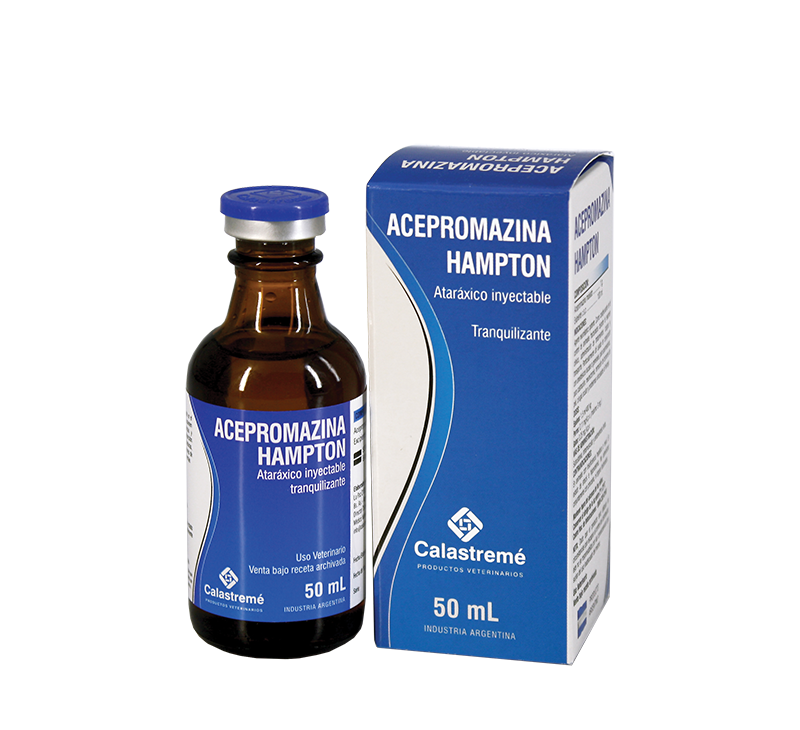
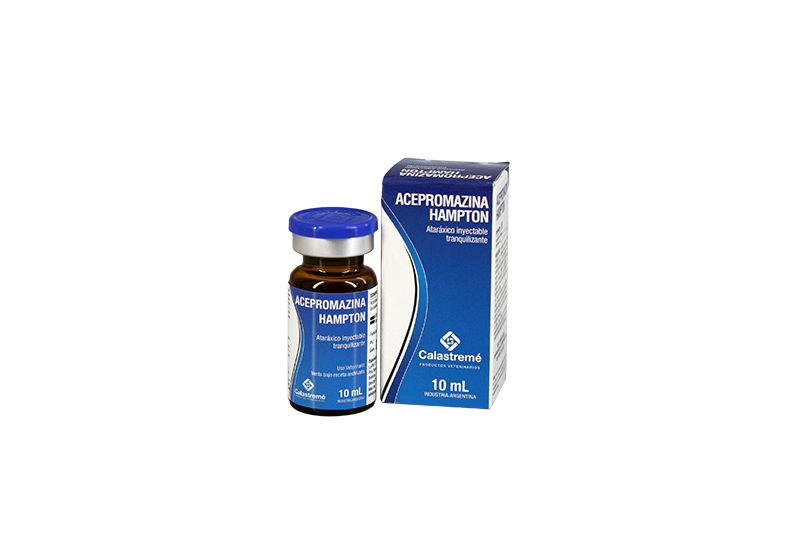
Acepromazina Hampton
INJECTABLE ATARACTIC TRANQUILIZER
Bottle x 10 and 50 ml
Formula:
Acepromazine Maleate 1 g.; Excipient q.s. 100 ml.
Indications:
Generally indicated as pre-anesthetic medication, being a potent neuroleptic agent. As an aid in the control of unruly animals and/or those presenting trauma at the time of clinical examination (e.g.: fractures, burns, etc.) that make examination difficult. It can also be used prior to transport and/or loading. It is useful when used together with other local or general anesthetics for various procedures or treatments (castration, neurectomies, skin tumor removal, ocular surgeries, shoeing-related problems, etc). In Horses it can be used as an adjunct treatment for laminitis (developmental phase) and in cases of colic to restore intestinal transit.
Dosage and routes of administration:
Each ml of product contains 10 mg of Acepromazine. Recommended doses by species are: Dogs: 0.05-0.1 mg/kg slow IV, IM, SC (do not exceed 3 mg total dose). Equivalent to 0.05-0.1 ml of Acepromazina Hampton per 10 kg body weight. (Do not exceed 0.3 ml total). Cats: 0.05-0.1 mg/kg slow IV, IM, SC (do not exceed 1 mg total dose). Equivalent to 0.025-0.05 ml of Acepromazina Hampton per 5 kg body weight. (Do not exceed 0.1 ml total). Horses: 0.01-0.05 mg/kg slow IV or IM, 0.044-0.088 mg/kg SC. Equivalent to 0.4-2 ml IV or IM, or 1.75-3.5 ml SC per 400 kg body weight.
Contraindications and limitations of use:
Acepromazine has adrenolytic actions by blocking alpha receptors, thus reversing the pressor effect of adrenaline, which then acts only on beta receptors. Therefore, adrenaline should not be used as a pressor amine; noradrenaline or phenylephrine should be used instead, as they act only on alpha receptors. In animals with liver disease it is advisable to use with caution, as the ACEPROMAZINA HAMPTON component is metabolized in the liver. It may cause minor cardiac arrhythmias. In animals with a history of cardiac disorders it is advisable to use with caution. In animals with heart disease it may worsen the condition, so caution is advised, as well as in geriatric animals. When given intravenously, inject slowly. In epileptic animals it may cause seizures. Its use is not recommended. Like all phenothiazine derivatives it potentiates the sensitivity to organophosphate compounds and to procaine hydrochloride. For this reason, simultaneous use with these should be avoided. Occasionally, adult breeding males may suffer irreversible penile prolapse, which must be manually reduced.
Back to products
Formula:
Acepromazine Maleate 1 g.; Excipient q.s. 100 ml.
Indications:
Generally indicated as pre-anesthetic medication, being a potent neuroleptic agent. As an aid in the control of unruly animals and/or those presenting trauma at the time of clinical examination (e.g.: fractures, burns, etc.) that make examination difficult. It can also be used prior to transport and/or loading. It is useful when used together with other local or general anesthetics for various procedures or treatments (castration, neurectomies, skin tumor removal, ocular surgeries, shoeing-related problems, etc). In Horses it can be used as an adjunct treatment for laminitis (developmental phase) and in cases of colic to restore intestinal transit.
Dosage and routes of administration:
Each ml of product contains 10 mg of Acepromazine. Recommended doses by species are: Dogs: 0.05-0.1 mg/kg slow IV, IM, SC (do not exceed 3 mg total dose). Equivalent to 0.05-0.1 ml of Acepromazina Hampton per 10 kg body weight. (Do not exceed 0.3 ml total). Cats: 0.05-0.1 mg/kg slow IV, IM, SC (do not exceed 1 mg total dose). Equivalent to 0.025-0.05 ml of Acepromazina Hampton per 5 kg body weight. (Do not exceed 0.1 ml total). Horses: 0.01-0.05 mg/kg slow IV or IM, 0.044-0.088 mg/kg SC. Equivalent to 0.4-2 ml IV or IM, or 1.75-3.5 ml SC per 400 kg body weight.
Contraindications and limitations of use:
Acepromazine has adrenolytic actions by blocking alpha receptors, thus reversing the pressor effect of adrenaline, which then acts only on beta receptors. Therefore, adrenaline should not be used as a pressor amine; noradrenaline or phenylephrine should be used instead, as they act only on alpha receptors. In animals with liver disease it is advisable to use with caution, as the ACEPROMAZINA HAMPTON component is metabolized in the liver. It may cause minor cardiac arrhythmias. In animals with a history of cardiac disorders it is advisable to use with caution. In animals with heart disease it may worsen the condition, so caution is advised, as well as in geriatric animals. When given intravenously, inject slowly. In epileptic animals it may cause seizures. Its use is not recommended. Like all phenothiazine derivatives it potentiates the sensitivity to organophosphate compounds and to procaine hydrochloride. For this reason, simultaneous use with these should be avoided. Occasionally, adult breeding males may suffer irreversible penile prolapse, which must be manually reduced.